Jakarta, 28 October 2025 — Today’s young generation is growing up amid worsening anxiety over the climate crisis. They bear the burden of past economic decisions that prioritized growth over sustainability, experiencing rising global temperatures, thickening air pollution, increasingly frequent floods, droughts, environmental degradation, and other social impacts.
On this year’s Youth Pledge Day, Indonesia’s young people voiced their concerns and demands for government accountability in addressing the climate crisis. In the biweekly discussion series Nexus of the Three Planetary Crises titled “Gen Z Demands Climate Accountability,” two speakers—Febriani Nainggolan, Campaign & Communication Staff at Climate Rangers, and Dian Irawati, Co-Founder of Kawula17—reviewed recent research showing rising awareness as well as growing disappointment among Gen Z regarding Indonesia’s climate crisis handling (28/10).
Climate Rangers’ research involving 382 Gen Z respondents in Jakarta showed that young people are aware that what they are experiencing today is the impact of climate change. However, most still view the climate crisis merely as extreme weather (95.5%). “The impacts of the climate crisis are highly complex, affecting physical and mental health, food security, and damaging infrastructure due to disasters such as flooding and tidal inundation,” said Febriani Nainggolan.
She added that a child born in 2020 will experience far more severe climate impacts than their grandparents’ generation—seven times more heatwaves, three times more frequent droughts, and twice as many major floods.
According to Febri, the greatest responsibility for addressing the climate crisis lies with the government. Yet 62.4 percent of respondents feel that youth involvement by the government is still tokenistic—merely symbolic and without meaningful participation. “Young people are often invited only for show, not truly involved in decision-making. Yet we are the ones who feel the impacts the most,” she stressed.
The discussion invited representatives from the Ministry of Youth and Sports, but none attended. Moderator Fiorentina Refani emphasized that Gen Z should not be involved merely to fill the stage; their input must be accommodated. “To the government officials who didn’t attend this discussion: listen to our message—change your policies for the sake of the younger generation. Take a more ambitious stance in reducing emissions,” she said firmly.
—
More Gen Z Are Becoming Environmental Activists
Dian Irawati from Kawula17 also presented findings from her institution’s research. In a public survey conducted in the third quarter of 2025 involving 404 respondents, two main issues stood out: inefficiency in waste management (33%) and environmental damage caused by mining (32%).
Growing attention to these issues has been fueled by widespread coverage of environmental destruction across Indonesia, such as the case in Raja Ampat that sparked the #SaveRajaAmpat campaign, as well as Indigenous forest land grabbing (26%), which gained visibility through the #SavePulauPadar movement. “These trends show that over the past two years, public awareness of ecosystem protection and environmental justice in Indonesia has significantly strengthened,” said Dian.
A separate survey of 1,342 young respondents also showed a significant rise in activism. “A total of 42 percent are now categorized as participants—up from previously being mere spectators—and 35 percent are activists. This means more young people are becoming interested and engaged in issues of the environment, human rights, gender, and anti-corruption,” Dian explained.
However, she noted that young people are often viewed as a burden, rather than as a vulnerable group that needs protection. “In reality, young people are the most vulnerable to the impacts of climate change. They should be involved as key actors because this concerns their future,” she asserted.
To address the climate crisis, Febri continued, the world has agreed to the Paris Agreement target of limiting global warming to below 1.5°C above pre-industrial levels. Unfortunately, temperatures have already risen by 1.3°C. Even under the most optimistic scenario, the increase is projected to reach 1.9°C—exceeding the safe threshold. “Indonesia’s climate policies are still not ambitious enough. Emissions continue to rise, even with contributions from the forestry sector,” said Febri.
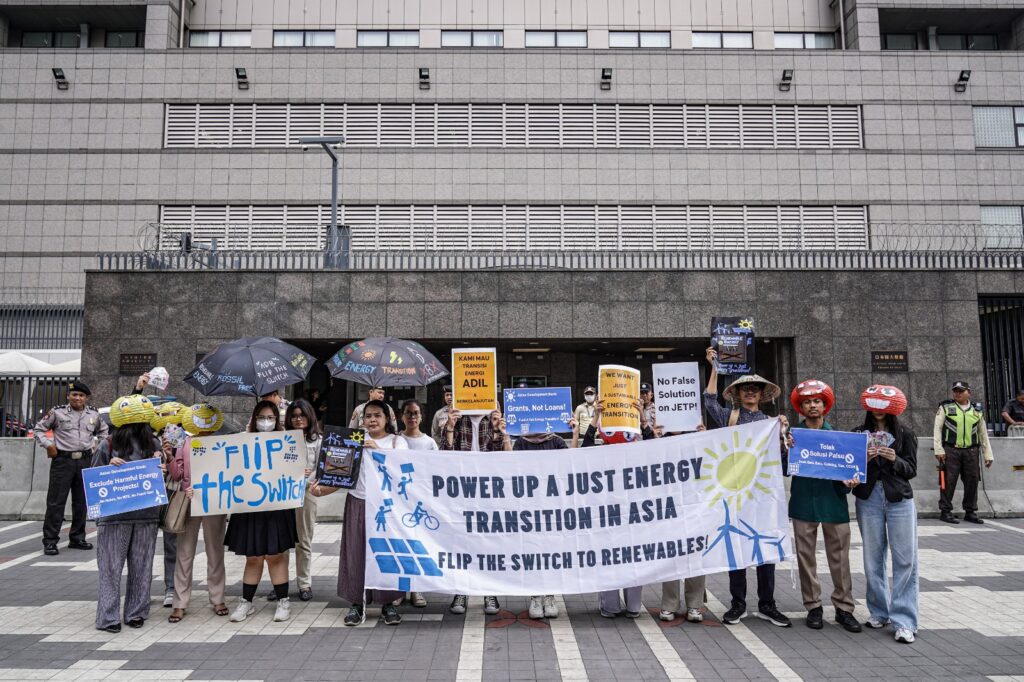
Through the Climate Rangers network across 32 provinces, Indonesian youth are putting forward a set of demands to tackle climate change. For the global community, Climate Rangers call for fair and ambitious climate policies, a just transition, financial justice and historical accountability, and meaningful youth participation.
For the Indonesian government, they demand the enactment of climate justice-oriented policies, the rejection of false solutions, acceleration of a just energy transition, funding for people-centered solutions, and policies that uphold environmental justice.